Beadable Pens Look Better When the Finished Grip Feels Right
A silicone bead may be the smallest part of a craft kit, but it is the first thing customers notice when the pen feels loose or the design sits off-centre.
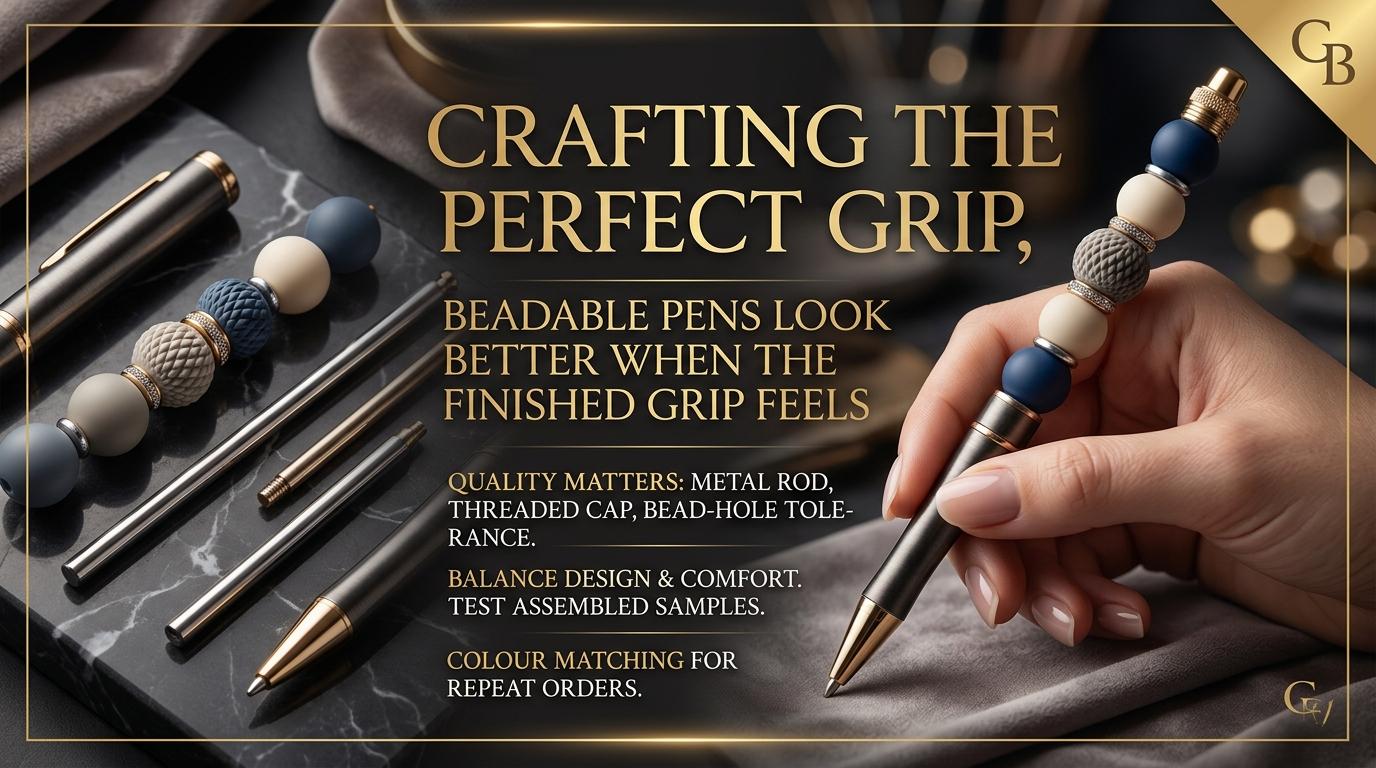
A silicone bead may be the smallest part of a craft kit, but it is the first thing customers notice when the pen feels loose or the design sits off-centre.
A silicone bead may be the smallest part of a craft kit, but it is the first thing customers notice when the pen feels loose or the design sits off-centre.
A beadable pen is easy to assemble, but getting the proportions right takes a little practice. One oversized focal bead can pull the visual balance away from the pen body and make the finished piece awkward to handle.
When buying silicone focal beads, confirm bead-hole size against the pen shaft and any spacers or accent beads. A design that looks right laid flat may wobble once it is fully assembled.
For sellers building pen kits, the metal rod, threaded cap and bead-hole tolerance deserve a proper fit check. Measure the hole rather than relying on a seller’s “standard size” description; soft silicone can stretch, but forcing a narrow hole may split the bead or distort its shape. A simple sample build with ten pieces also exposes whether spacer thickness changes the feel. Product photos should show a completed pen held in a hand, not just beads scattered on a table, so customers understand the finished size.
For beadable pens, the arrangement of silicone focal beads must accommodate both aesthetics and a comfortable grip. A very wide bead placed close to the writing tip may look attractive in a flat-lay photo but make the pen awkward to use. Test a fully assembled sample with the exact spacer rings and shaft being sold.
Colour matching deserves extra attention for repeat orders. The same named colour may vary across silicone batches or photography lighting. Retailers can reduce surprises by reviewing physical swatches and retaining reference samples, especially for seasonal collections built around matching charms.
Color planning works better in small groups than in large random assortments. Try one focal bead, a neutral spacer and a restrained accent; the texture and silhouette often do more work than adding another bright component.
For craft sellers, repeatability matters. Photograph finished designs, keep simple component lists and check for loose parts before shipping so a popular pen can be remade without hunting through a drawer of mixed beads. The comparison becomes fairer when recurring costs are spread over the realistic service period instead of judged from a single invoice.
Small parts deserve clear age guidance and sensible packaging. A pretty design is only a successful product if the materials, assembly and intended customer are considered together.